
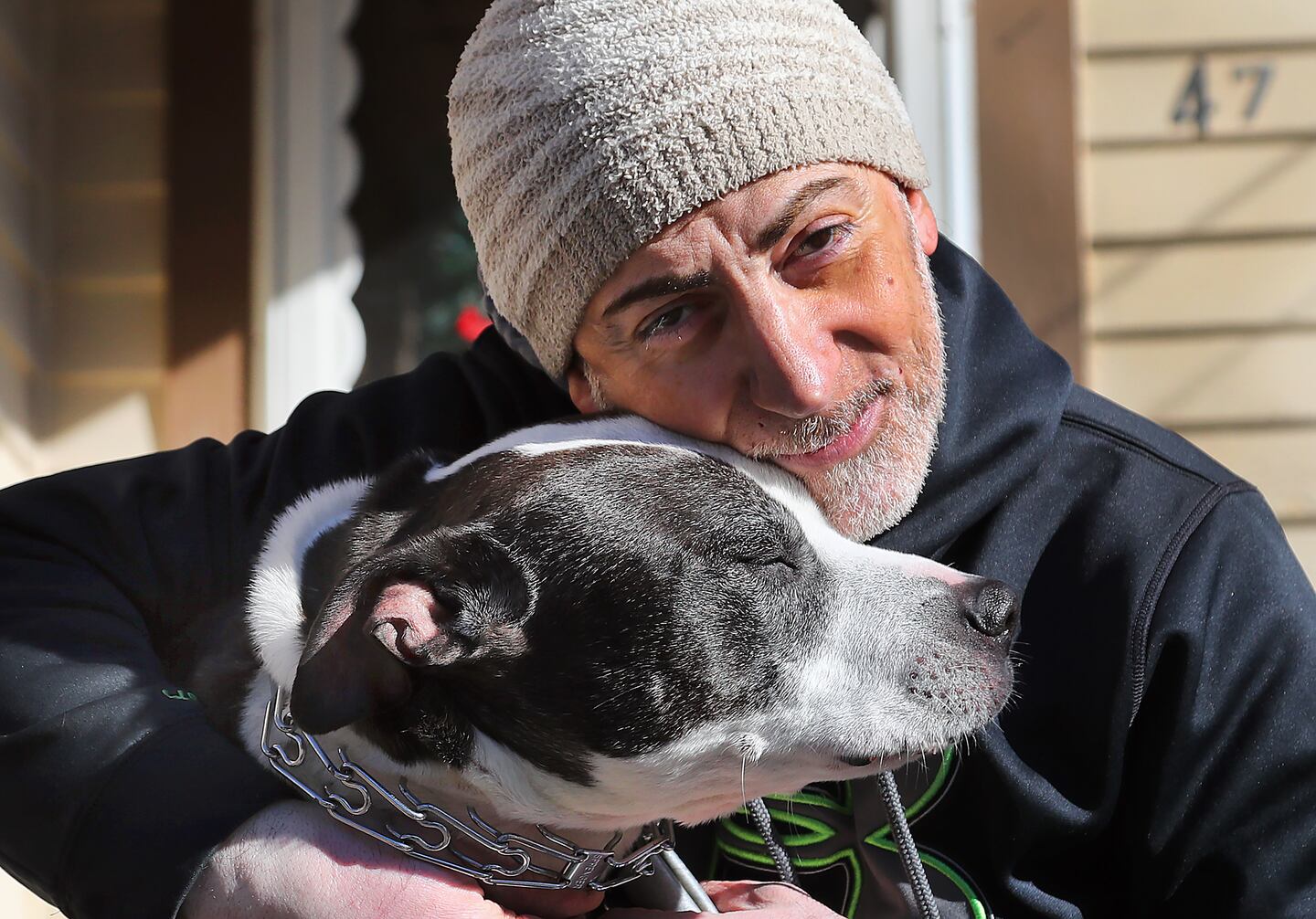
PAWTUCKET, R.I. — Last fall, Pawtucket police officers went into a neighboring city without alerting the local police, tackled a resident in his home, seized his dog, booked the man, and put him in a jail cell. He was released hours later without being charged with a crime — and without an explanation.
Months later, James Barsoum said, he still doesn’t know why he was arrested.
The Rhode Island Access to Public Records Act states that police records that reflect “the initial arrest of an adult and the charge or charges brought against an adult” are public records. Those reports also include basic information about the person arrested and the names of the arresting officers.
But the Pawtucket Police Department denied the Globe’s public records request for the arrest record. And now, the state’s attorney general’s office has decided that arrest reports are public records only if the adult who was arrested is charged with a crime — a decision that civil rights and public records advocates say could allow police to conduct “secret arrests” and avoid scrutiny.
“Police in this state can break into your house, wrongfully arrest you, and never have to explain themselves to the communities they serve,” said Justin Silverman, the executive director of the New England First Amendment Coalition. “Think about that: So long as charges aren’t brought, arrests can occur in secrecy and the police reports can be permanently sealed or destroyed. It’s a situation ripe for abuse.
“Worse, we now have the AG’s office signing off on this practice and making it easier to conceal who is arrested and why,” Silverman added.
In response to a complaint by The Boston Globe, Special Assistant Attorney General Patrick Reynolds decided that the Pawtucket Police Department did not violate the state law when it refused to release Barsoum’s arrest report.
“We agree with the [Globe] that there is a public interest in what transpired here, and that the mistaken arrest of a member of the public is highly concerning,” Reynolds wrote in his May 14 decision. “However, we find that the public interest in the disclosure of the responsive reports is outweighed by the privacy interests implicated by the disclosure of such reports, especially in light of the sealing statute.”
Reynolds focused on the state law’s use of the word “and,” determining that only arrests that result in charges are public record. Reynolds also pointed to another state law that allows police departments that have made wrongful or mistaken arrests to seal the reports and destroy identifying information within 60 days — an issue that Pawtucket did not raise when it refused to release the record. Reynolds said it would be “contrary to legislative intent” to determine an arrest that did not result in charges was a public record.
His interpretation came as a surprise to the prime sponsors of the 2012 legislation.
“If it doesn’t violate the letter of the law, it certainly seems to circumvent the spirit of it, and that’s certainly as troubling as violating the letter of the law,” said former state senator James Sheehan. “If anything, these public entities should err on the side of transparency and not secrecy. Otherwise, how would we be able to determine if anything wrong was perpetrated against the public?”
When the lawmakers developed the legislation that “arrests and charges” were public, they weren’t making a differentiation between the two by using the word “and,” said former state representative Michael Marcello. If anything, he said, the wording “may have been over-inclusive” in making clear what information should be public.
“An arrest report usually has a charge,” Marcello said. “There has to be something to hold [the person who is arrested]. There has to be a violation of a statute. Otherwise, you’re just holding them.”
Marcello recalled the discussions at the State House about the “balancing test” to determine what information in police reports could be released, such as when police investigated a complaint that ended up being unfounded.
But that’s different from arrests, Marcello said. “There were concerns when law enforcement agencies exercise their powers of arrest and actually hold somebody,” he said. “That’s a use of power that deserves public scrutiny.”
Civil rights and public records advocates said the attorney general’s decision gives the police the ability to avoid such scrutiny in wrongful arrests.
Steven Brown, the executive director of the American Civil Liberties Union of Rhode Island, said the attorney general’s decision offered a way for police to take away people’s liberties without cause or accountability.
“I think the public ought to know if the police department is routinely arresting people and holding them and letting them go without charges,” Brown said. “But this opinion is that it’s perfectly all right to do that and keep it secret.”
In rejecting the Globe’s initial public records request, Pawtucket City Solicitor Frank Milos told the attorney general’s office that an arrest report isn’t public without charges. He argued that Barsoum “is a private citizen who was detained for only a few hours,” so the public interest in police operations and accountability “is significantly diminished.” (Barsoum’s dog, Buddha, was held for five days at the Pawtucket Animal Shelter under quarantine because he bit one of the officers.)
Reynolds agreed with Milos, and though Barsom went public with his story, determined that disclosing the police report would “serve only to further victimize” Barsoum.
“There is a material difference between what the subject of the report may voluntarily wish to disclose in a media interview and the disclosure of a police report, which is a document that carries a certain stigma and that was created without the subject’s participation or input,“ Reynolds wrote.
Reynolds also noted, but didn’t question, that the Pawtucket police also did not record Barsoum’s arrest in its arrest log.
The police in Central Falls, where Barsoum lives and where the arrest took place, quickly released its reports and video of his arrest in response to a public records request from the Globe.
By protocol, when police want to arrest someone outside their jurisdiction, they are supposed to first notify the local police department for assistance. But the Pawtucket police didn’t notify Central Falls until they’d grabbed Barsoum in his home and needed help controlling his dog.
Barsoum filed an internal affairs complaint against the Pawtucket police. Eight months later, he said he still wants to know which officers were responsible.
Boston civil rights attorney Mark Loevy-Reyes, who won a $1 million settlement against the Pawtucket Police Department in 2024 in a wrongful arrest case, said Barsoum’s arrest and the efforts to keep it secret raise suspicion.
“Police reports are required to document the activities of police officers. They are important to assess the legality of their work. They are important for both criminal and civil litigation,” Loevy-Reyes said. “Police experts routinely testify that accurate police reporting is a fundamental part of police work, and we have argued that the absence of police records to document police action can be evidence of wrongdoing.”
Those reports are essential for the public to hold the police accountable, he said.
“Police reports allow for the public to see what the police are doing, whether there is a wrongful arrest or not,” Loevy-Reyes said. “If they say they can hide behind public records laws and not disclose, it’s frankly an outrage.”
Amanda Milkovits can be reached at amanda.milkovits@globe.com. Follow her @AmandaMilkovits.