
A brand-new exhibition at the Gardner Museum has three major portraits by Rembrandt van Rijn at the top of its marquee. That ought to do it: You had me at “hello.” But “The Book of Esther in the Age of Rembrandt” is a revelation. Rembrandt might get you through the door, but there’s reason to stay long. The show marries faith and a world in rapid transformation to a pop-cultural phenomenon that defined an era. And — even better — if you’re like me, much of it will be news to you.
Let’s start with the Book of Esther itself, an Old Testament biblical tale and a classic hero’s journey. Esther was a peasant girl plucked from the masses to be the bride of a Persian king. But her betrothal came with great risk: She was Jewish, a fact she concealed from the king. Jews were a persecuted minority in the kingdom, governed by more stringent laws. When one of the king’s advisers urged the king to kill every Jew in the kingdom, Esther revealed herself, desperate to save her people. The king heard her plea, hanged the murderous adviser, and an era of tolerance began.
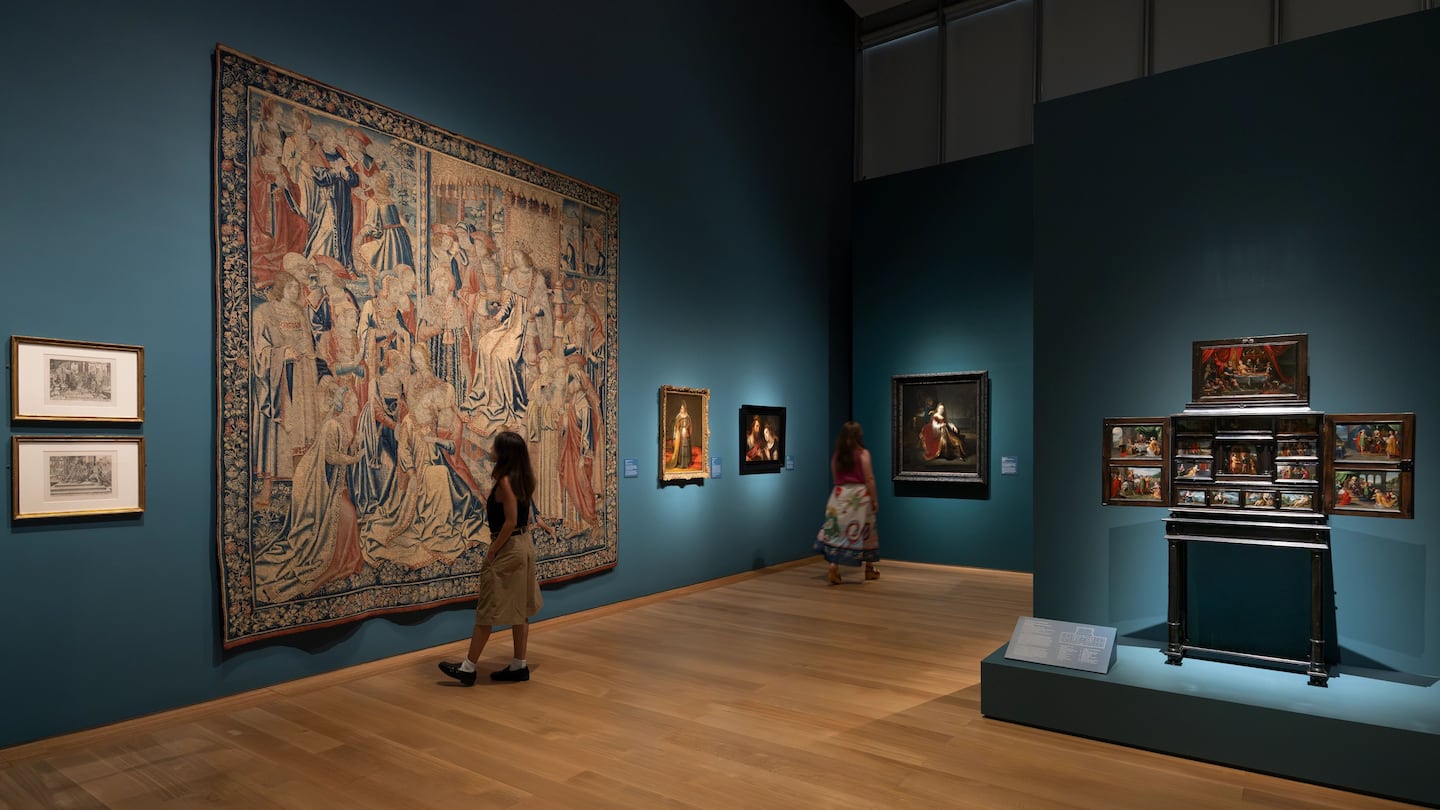
If that sounds like a Hollywood ending — the hero validated, the villain vanquished — I’m with you. But in 17th-century Netherlands, a burgeoning cosmopolitan crossroads of international commerce and culture, it really did have “Star Wars”-esque appeal. Painters of the Northern Renaissance rendered scenes of the comely heroine in selfless sacrifice over and over and over again. The Jewish festival of Purim, a centuries-old celebration of Esther’s story, was a cross-denominational public party.
Why? Well, everyone loves the triumph of an underdog; Joseph Campbell had plenty to say about that. But the Netherlandish region had a set of circumstances that left it primed to embrace this story. A significant community of Portuguese Jews already had a major presence in Amsterdam. Their synagogues were architectural marvels. And the seafaring trade that had fueled the Netherlandish region’s economic explosion of the era counted robust exchange with the Middle East among its many engines. And the Netherlands had its own problems: Under the thumb of the Kingdom of Spain, its Catholic oppressors, mostly-Protestant Netherlanders surely saw themselves in Esther’s dilemma and yearned for their own hero to set them free.
The exhibition takes all of this in hand as it walks you through a bona fide pop-culture sensation. You can choose to see all of this in Rembrandt’s “Portrait of a Jewish Heroine (possibly Esther) from the Hebrew Bible,” 1632-33. It’s a dazzler of a painting of a Dutch noblewoman being preened by an attendant in a shadowy chamber with Persian motifs amid the finery surrounding her in the darkness. Her identity not withstanding, the signifiers are clear: Her faith, right there in the title, and the fashionable trappings of wealth drawn from the Near East. Ambiguous to our eyes, it’s filled with clues that, to people of his time and place, would likely have left little doubt.
It’s worth remembering that, in the Renaissance, the Bible was popular culture. The printing press had helped promote widespread literacy, and the Bible’s translation from Latin to common languages across Europe made it the most popular book in the world. In the Renaissance, painting had evolved from simple devotional scenes to elaborate biblical narratives, the higher the drama, the better. That often meant ghastly, too. I can’t help but think of Rubens’s “The Massacre of the Innocents,” a scene of grisly slaughter of infants; or the story of Judith slaying Holofernes, rendered in most gruesome detail by Artemesia Gentileschi.
When we talk about popular cultural, we’re inevitably talking about fad and fashion. In the cosmopolitan world of the Northern Renaissance, there was plenty of that. Vast wealth generated by international trade brought with it a desire to display not just riches, but a worldliness worth more than its weight in gold.
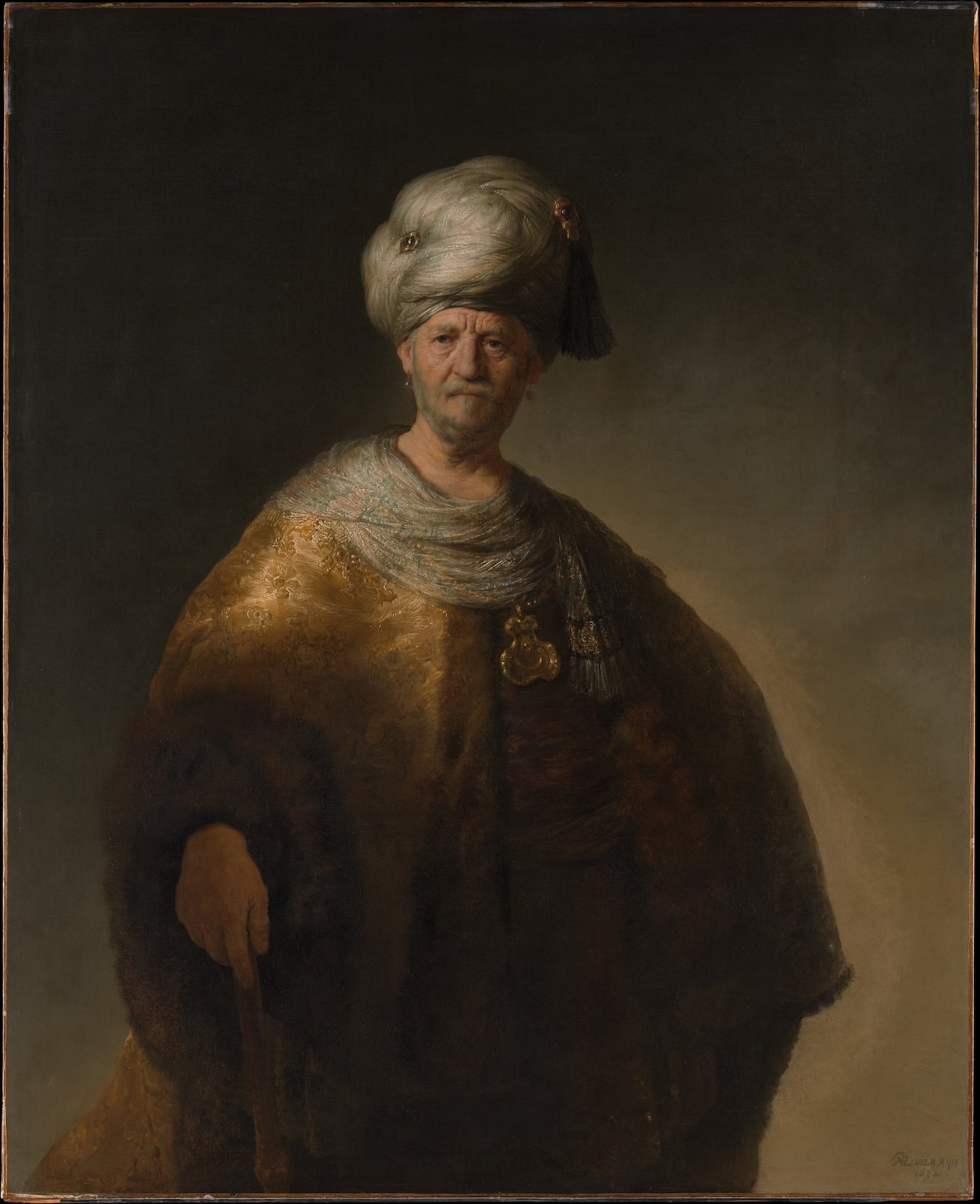
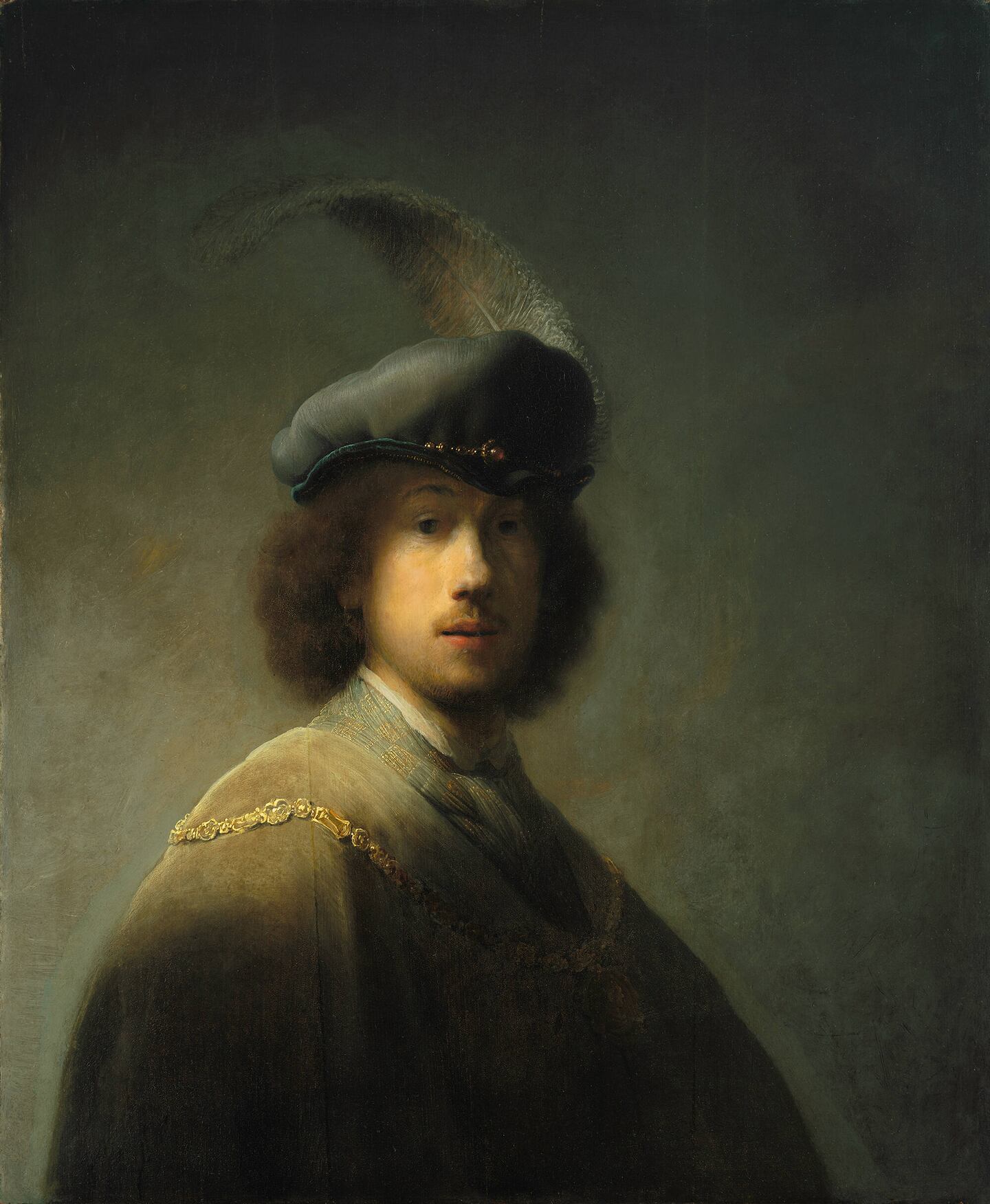
A second Rembrandt portrait, stunning both in scale and the artist’s trademark gift for capturing an unearthly play of light, is a totem of such status. “Man in a Turban,” 1632, depicts an elderly man with his head swathed in silky white fabric, his body draped in shimmering gold robes. Whether a commission or not, we don’t know. What we do know is that the growing fashion of the time had created a market for paintings of Persian and Ottoman royals. (The third Rembrandt portrait here, the Gardner’s own spectacular self-portrait of the artist as a young man in 1629, shows a fuzzy-chinned striver, just 23, decked out in a feathered tam as a badge of his urbane internationalism.)
A symbol of wealth, of worldliness, and of defiance to Spanish rule all at once, paintings of this nature surely struck a chord. Fashion aside, the region’s growing diversity and cosmopolitanism was itself defiant to the oppressive culture of Spanish Catholicism, and deeper strains of solidarity solidified Judaism in Netherlandish culture. Rembrandt himself was close with the rabbi Menasseh ben Israel, founder of the first Hebrew printing press in the Netherlands; he made a portrait of the rabbi for a book he created for a welcoming address for the visiting English queen in 1642.

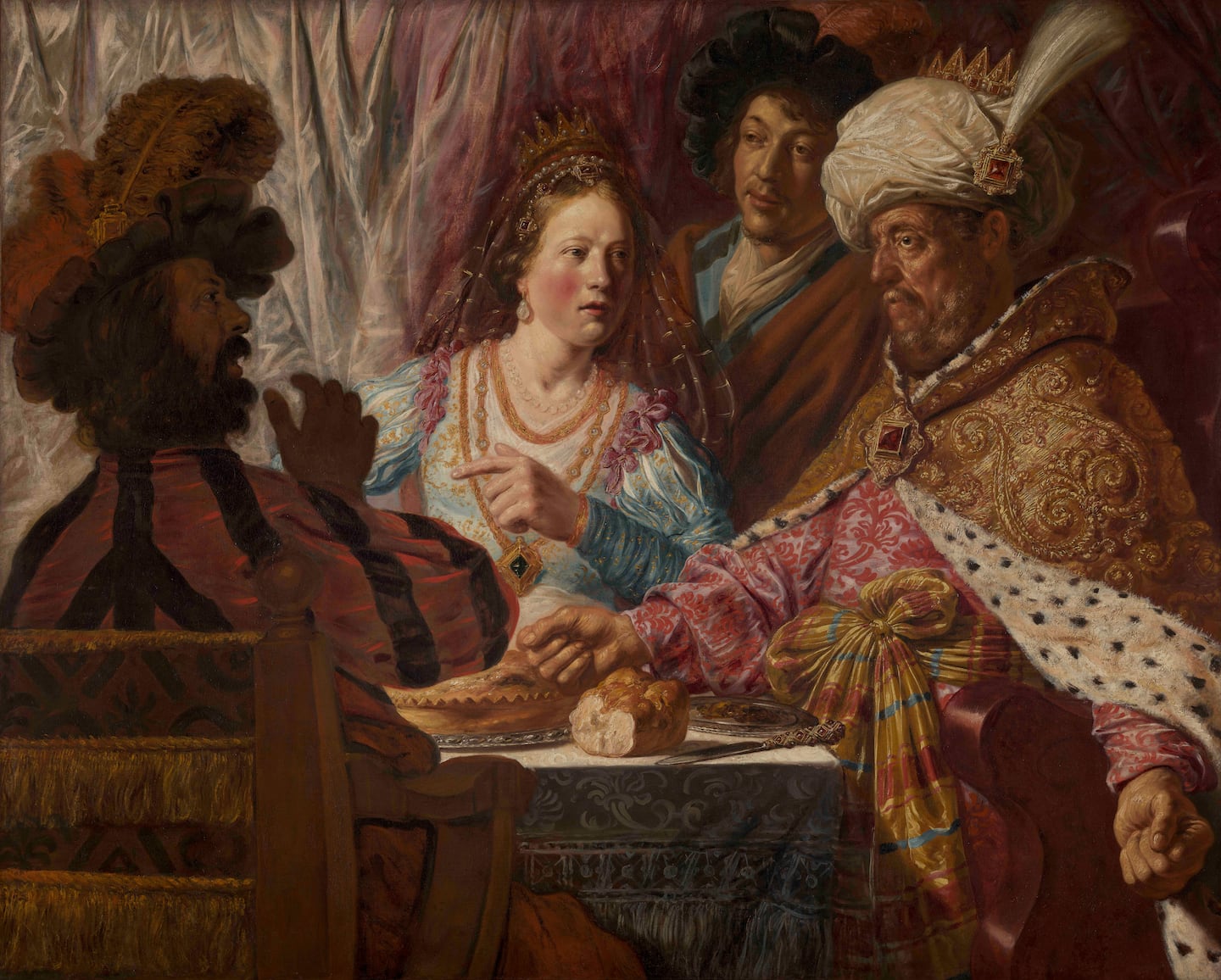
That alliance plays out in depictions of all kinds, but Esther herself was the obvious star. Scenes of high drama were favored by most artists: Jan Lievens “The Feast of Esther,” around 1625, is a jam-packed frame, with the queen confronting King Ahasuerus, both of them all but buried in extravagant robes and gowns (the king, with capes and sashes and a tower of a turban, is insulated enough to brave an arctic storm). It would win for over-the-topness, but it has plenty of competition: Hung across from it is “Esther, Ahasuerus, and Haman,” 1668, by Jan Steen, a version of the same confrontation set amid a rowdy, drunken banquet — smashed glasses, a wobbly-looking king — amid a crowd of onlookers.
Steen had a freer hand; he was working two decades after the 80 Years War for Dutch independence — which broke Spain’s grip in 1648 — when the oppressor could perhaps be ridiculed more freely. But for me, there’s little parallel to be found to the somber vision of Jan Adriaensz van Staveren, who painted in the early 1640s.
Hung here near Rembrandt’s portrait of a Jewish heroine, it feels like the next scene in the movie of her life. Carefully preened to go before the king, Esther kneels before Ahasuerus, head bowed, as he and his courtiers gravely hear her plea. Light floods in from the window behind him; she’s at the center of the frame, aglow with righteous cause.
Choose your fighter, I suppose; I’ll always choose the solemn quest. In 17th-century Netherlands, a place much in need of a hero, she came in many flavors, every one of them a winner.
THE BOOK OF ESTHER IN THE AGE OF REMBRANDT
At Isabella Stewart Gardner Museum, 25 Evans Way. Through Jan. 18. 617-566-1401, www.isgm.org
Murray Whyte can be reached at murray.whyte@globe.com.